Skin Tech 101: Clinically Proven vs. Marketing Claims
FDA cleared, FDA registered, clinically proven…if you come across these terms while comparing LED devices, you might assume they mean the same thing. After all, they’re similar, and seem to be used interchangeably in marketing materials. But their meanings can actually differ, and may not be what you expect.
Although these claims can be confusing, with a little clarification, you can decipher them in your search for a reputable LED device. In this article, we’ll break down what these terms truly mean and offer insights into separating legitimate evidence from marketing jargon.
Why These Terms Can Be Misleading
Terms like FDA cleared, FDA registered, and clinically proven are often used broadly across LED devices to signal credibility and gain consumer trust. But without context or specifics, they don’t necessarily reflect how a product performs.
To get an accurate picture of a device’s efficacy, we need a deeper understanding of how it works by evaluating its specifications and confirming its status with the FDA.
What “Clinically Proven” Actually Means
“Clinically proven” helps garner trust in an LED device by connecting it to clinical research. But while many devices include the term “clinically proven” in marketing materials, when you look behind the scenes, you might struggle to find valid studies to back up the claim.
Strong clinical claims are best supported by human studies on the specific device and its intended use. Keep in mind that a study on “red light” typically refers to red light technology in general, not a particular device or how that light is delivered. These details matter to how the device will impact your skin and whether it will perform as advertised.
Clinical proof depends on:
-
The exact wavelength (nm) used
-
This determines whether the device will effectively address specific skin concerns, like signs of aging or blemishes.
-
This determines whether the device will effectively address specific skin concerns, like signs of aging or blemishes.
-
The output (mW/cm2) and delivered dose
-
This determines how much light actually reaches your skin.
-
This determines how much light actually reaches your skin.
-
How the device delivers light to the skin
- This factor depends on the device’s design and whether it can evenly distribute light across the skin. Look for a device that conforms closely to the treatment area, which may help support more even contact and light delivery.
- This factor depends on the device’s design and whether it can evenly distribute light across the skin. Look for a device that conforms closely to the treatment area, which may help support more even contact and light delivery.
FDA Cleared vs. FDA Registered vs. FDA Approved
Any reference to the FDA aims to build consumer trust, as it suggests that the device has been reviewed by a government agency. However, this doesn’t mean that FDA cleared, registered, and approved all mean the same thing when stamped onto an LED device. By understanding the difference between these terms, you can quickly separate genuine authority from marketing buzzwords.
FDA Cleared
Meaning: The device has been formally reviewed by the FDA for its intended use, commonly through the 510(k), a premarket submission demonstrating that the device is as safe and effective as a legally marketed device.
This is the most relevant pathway for many at-home LED devices, which are considered low-to-moderate risk (Class II) medical devices and, therefore, don’t typically receive FDA approval. FDA approval is generally only required for high-risk (Class III) devices.
FDA Registered
Meaning: The company or facility is listed with the FDA, as required to produce and distribute medical devices within the U.S.
This term doesn’t in any way indicate how a device performs or whether it’s supported by clinical results. When used in LED device marketing, it can be misleading and is often mistaken for FDA clearance.
FDA Approved
Meaning: Potentially inaccurate for LED devices; verify whether the device is actually FDA cleared before purchasing.
While it may sound impressive, the term “FDA approved” is widely misused in LED device marketing. As discussed above, LED devices typically receive FDA clearance, not approval. This makes “FDA approved” misleading and often inaccurate for this type of device.
How Omnilux Approaches Product Development
How a company approaches product development ultimately determines whether it’s built on a foundation of evidence or with a facade of flashy marketing. Omnilux starts with one question: what does the strongest evidence support, and how can it be delivered safely and effectively?
Rather than working forward from marketing claims, Omnilux takes the most robust evidence available and works backward. This results in products that not only align with evidence, but are developed around it, with:
-
Clinically studied wavelengths and parameters, not just vague ranges, including:
-
633nm red light, commonly studied to support skin rejuvenation and renewal processes
-
830nm near-infrared light, commonly studied to target deeper fibroblast cells and stimulate new collagen and elastin production
- 1072nm near-infrared light, commonly studied to penetrate men’s thicker skin
- 415nm blue light, commonly studied to neutralize acne-causing bacteria
-
633nm red light, commonly studied to support skin rejuvenation and renewal processes
-
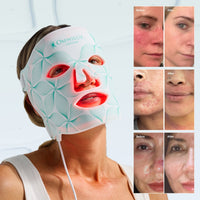
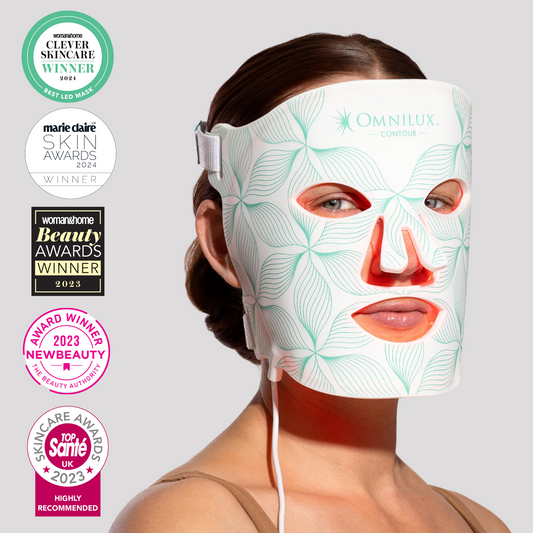
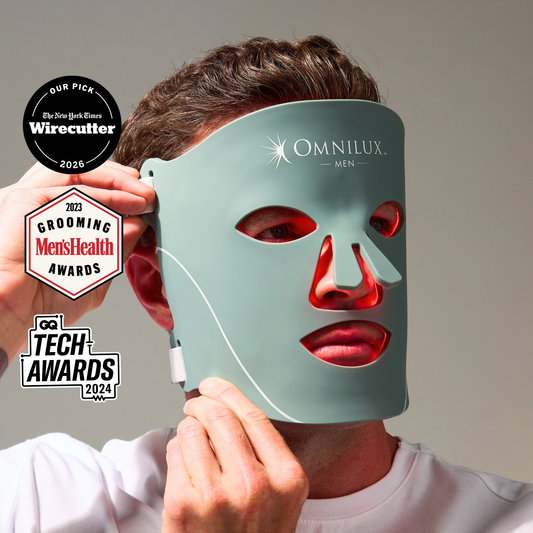
Broad coverage and a close fit for uniform light delivery, with a flexible silicone design that conforms to the treatment area
-
Safety and comfort to support consistent use
Why Clinical Proof and FDA Clearance Matter
Clinical outcomes stem from evidence-based wavelengths delivered at optimized dosages. A substantial body of published research has evaluated specific wavelengths: 633nm red light and 830nm near-infrared light, to be exact. These specifics help distill your search for an LED device down to a few key specifications, helping to narrow your options and remove unnecessary complexity.
Omnilux devices are backed by over 40 clinical studies and FDA clearance, illustrating their commitment to legitimate evidence. The brand’s foundational research and clinical studies report visible improvements with consistent use over several weeks, providing concrete expectations to help build your routine.
How to Evaluate LED Claims (What to Look For)
To narrow the field and find an LED device that supports your goals, check off these essential factors before committing to a product:
- What exact wavelengths are used?
- What dose is delivered, and what’s the treatment time?
- Has the device been tested in human clinical studies?
- Is the device FDA cleared for its intended use?
The Takeaway: Real Validation Goes Beyond Marketing
Marketing claims are no doubt compelling (they’re written for exactly that reason!). But they don’t necessarily reflect how a device performs, or whether it will deliver on those claims.
- Reputable LED devices are defined by:
- Evidence-backed wavelengths (a specific number, not a range)
- Measured, consistent output and specific treatment times
- Clinical testing on the actual device, not general LED light therapy clinical studies
- Clear regulatory status (for LED devices, this means “FDA cleared”)
To better understand how clinically validated LED light therapy is designed and delivered, explore Omnilux’s collection of LED devices and educational resources.